By NewsYog Editorial Desk
—
Setting the Stage: A Diplomatic Reality Check
Diplomacy often begins with a poker face. Nations test each other’s patience, resilience, and willingness to compromise. But when one side refuses to blink, the other must decide whether to escalate or engage. In the latest chapter of India–U.S. relations, the United States has chosen engagement.
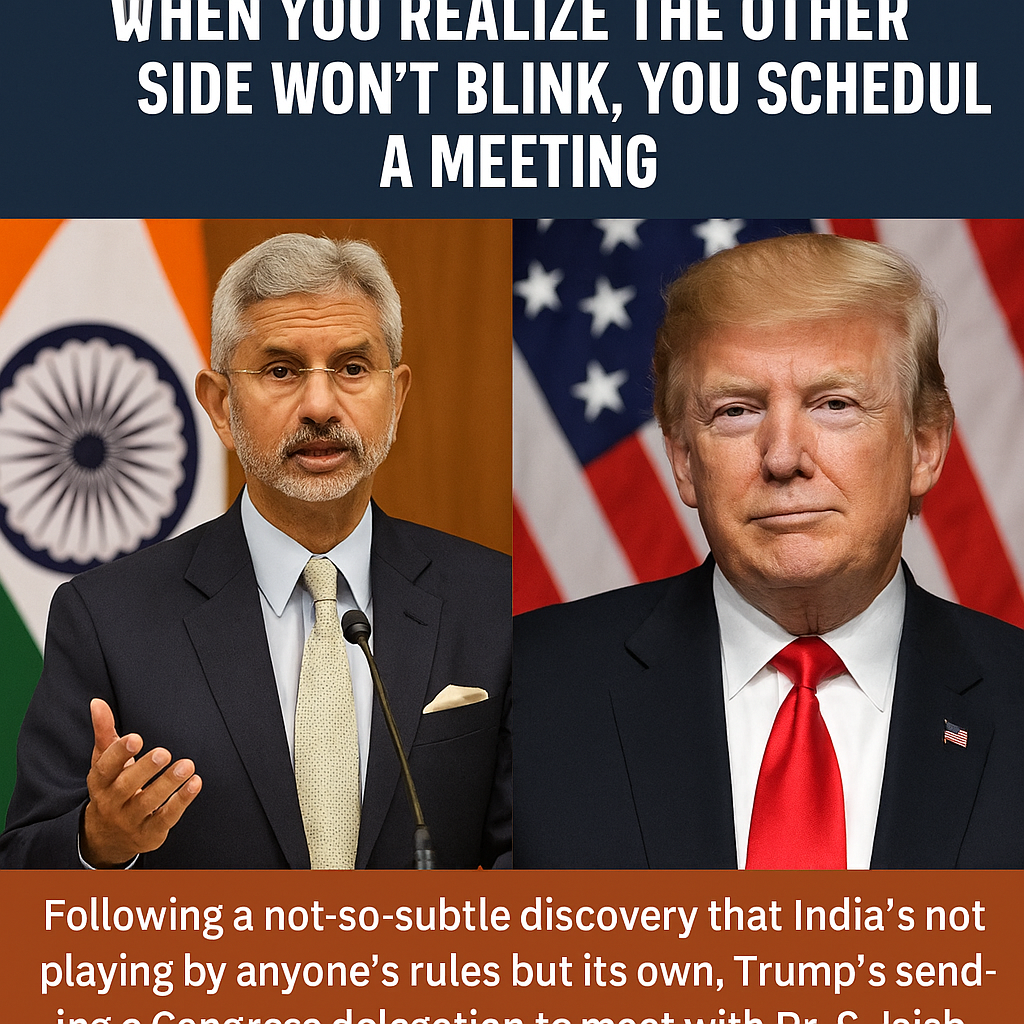
President Donald Trump, recognizing India’s firm stance on charting its own independent path, is dispatching a Congressional delegation to meet with India’s External Affairs Minister, Dr. S. Jaishankar, this Sunday. The mission is clear: move beyond rhetoric and start building a framework for mutually beneficial cooperation.
This moment is not just about geopolitics; it’s about acknowledging that India is no longer a passive player in global affairs. It is a nation that insists on being treated as an equal partner, not a canvas for someone else’s art.
—
India’s Diplomatic Posture: Playing by Its Own Rules
India’s foreign policy in recent years has been defined by strategic autonomy. Whether it’s energy imports, defense partnerships, or trade negotiations, New Delhi has consistently demonstrated that it will not be pressured into alignment with any single bloc.
- Energy Security: India continues to diversify its energy sources, balancing imports from traditional allies with new partnerships.
- Defense Procurement: From Russian S-400 systems to U.S. fighter jets, India’s defense deals reflect pragmatism rather than ideological loyalty.
- Global Forums: India’s active role in BRICS, G20, and the Quad shows its ability to straddle multiple platforms without compromising sovereignty.
For Washington, this posture is both a challenge and an opportunity. The challenge lies in recalibrating expectations; the opportunity lies in forging a relationship that respects India’s independence while advancing shared interests.
—
Why This Meeting Matters
The upcoming dialogue between the U.S. Congressional delegation and Dr. Jaishankar is more than a ceremonial handshake. It signals a recognition that transactional diplomacy has limits. If the U.S. wants India as a reliable partner in trade, security, and global governance, it must approach the relationship as a collaboration of equals.
Key areas likely to dominate the agenda:
- Trade Relations: Addressing tariffs, market access, and supply chain resilience.
- Defense Cooperation: Expanding joint exercises and technology sharing.
- Regional Security: Navigating challenges in the Indo-Pacific, particularly with China’s assertiveness.
- Climate and Technology: Collaborating on clean energy, AI, and digital governance.
—
The Art of the Deal: Both Sides as Artists
Trump’s famous phrase, “the art of the deal,” takes on new meaning here. Deals succeed when both sides feel empowered, not cornered. In diplomacy, this means recognizing cultural, political, and economic realities.
India does not want to be lectured; it wants to be heard. The U.S. does not want to be sidelined; it wants to remain relevant in Asia’s rise. The metaphor of artists and canvas is apt: both nations must paint together, blending colors rather than imposing strokes.
—
Lessons in Diplomacy 101:
1. Respect Autonomy: India’s refusal to play by external rules is not defiance; it is assertion. Respecting this autonomy is the first step toward genuine partnership.
2. Move Beyond Symbolism: Delegations and photo-ops matter, but substance matters more. Concrete agreements on trade, defence, and technology will define success.
3. Balance Domestic Politics: Both nations face internal pressures. For the U.S., Congress must balance bipartisan views on India. For India, Jaishankar must align external commitments with domestic priorities.
4. Think Long-Term: Quick wins are tempting, but sustainable diplomacy requires patience. Building trust takes time, especially when both sides are strong-willed.
—
India–U.S. Relations: A Work in Progress
The India–U.S. relationship has always been complex. From Cold War estrangements to 21st-century strategic partnerships, the journey reflects evolving priorities. Today, both nations recognize the need for collaboration, but they also acknowledge differences.
- Economic Ties: Bilateral trade has grown steadily, but disputes over tariffs and market access persist.
- Defense Partnerships: Joint military exercises and arms deals have expanded, yet India remains cautious about overdependence.
- Global Governance: Both nations share democratic values, but differ on approaches to multilateral institutions.
This meeting is not a magic wand. It is a step in a long process of negotiation, compromise, and mutual recognition.
—
Conclusion: Scheduling the Meeting Is the Blink
In diplomacy, scheduling a meeting is itself an act of concession. It signals willingness to talk, to listen, and to find common ground. By sending a Congressional delegation to meet Dr. Jaishankar, the U.S. is acknowledging that India’s stance deserves respect.
For India, hosting the delegation is a chance to reinforce its position as a global power that engages on its own terms. For the U.S., it is an opportunity to recalibrate its approach and embrace a partnership that is less about dominance and more about collaboration.
Diplomacy 101 teaches us that when neither side blinks, the smartest move is to sit down at the table. And perhaps, in this case, to pick up the brush and paint a new canvas together. 🎨