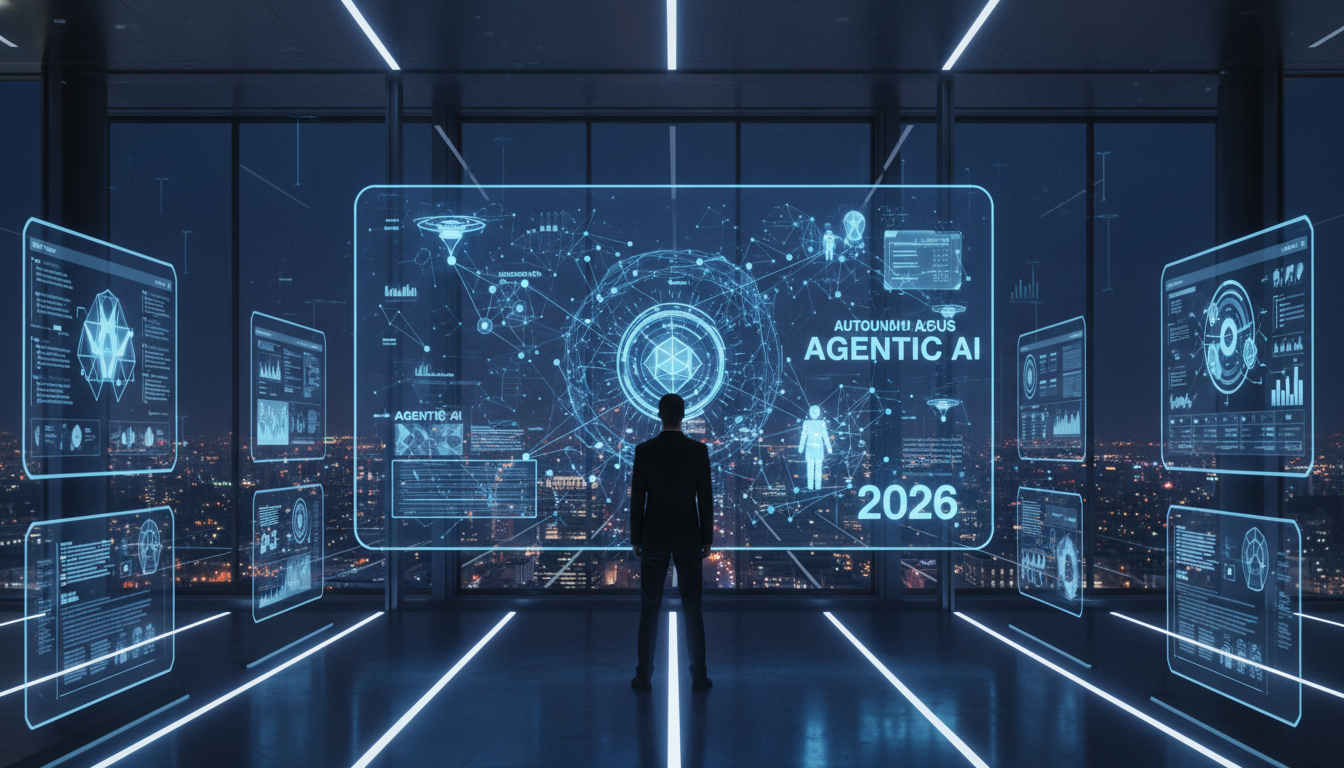
New York: Artificial intelligence is entering a new phase. After years dominated by generative AI tools capable of producing text, images, and code, the next major shift is toward Agentic AI—autonomous systems designed not just to respond to prompts, but to plan, decide, and execute tasks with minimal human intervention.
Technology analysts and enterprise leaders say that by 2026, these AI agents could become deeply embedded across business operations, transforming how companies manage supply chains, sales, software development, and internal workflows.
From Assistive AI to Autonomous Execution
Most AI systems in use today, including large language models (LLMs), function as assistive tools. They respond to user inputs, generate content, and offer recommendations, but rely on humans to take action.
Agentic AI represents a shift from assistance to execution.
Unlike traditional chatbots, autonomous agents are designed to:
- Break complex goals into smaller tasks
- Access enterprise tools such as CRMs, ERPs, and databases
- Act on real-time data
- Adapt their behavior when errors or unexpected conditions arise
For example, instead of simply answering questions about supply chain performance, an AI agent could identify a potential disruption, contact alternative suppliers, and reroute shipments—without waiting for human approval at every step.
What Is Driving the Shift to Agentic AI?
Industry experts point to three technological developments accelerating the move toward autonomy.
Improved Reasoning Capabilities
Newer AI models show stronger planning and multi-step reasoning skills, allowing them to manage workflows rather than produce isolated outputs.
Reliable Tool Integration
Advances in API connectivity now enable AI systems to interact directly with business software, perform transactions, and trigger actions across platforms.
Long-Term Memory and Context
Expanded context windows and persistent memory allow agents to retain institutional knowledge, making them more effective over time and less dependent on repeated instructions.
Together, these capabilities are turning AI into a digital worker rather than a conversational assistant.
How Agentic AI Could Transform Business Functions
Supply Chain and Logistics
Supply chains remain vulnerable to geopolitical tensions, climate disruptions, and demand volatility. Autonomous agents could continuously monitor inventory, analyze global events, forecast shortages, and coordinate with suppliers—reducing response times and human workload.
Sales and Customer Outreach
In B2B sales, early engagement is increasingly data-driven. By 2026, companies may rely on AI agents to research prospects, personalize outreach, manage follow-ups, and schedule meetings automatically, leaving human teams to focus on negotiation and relationship building.
Software Engineering and IT Operations
Agentic systems are also beginning to appear in software development. These agents can detect bugs, generate fixes, test solutions, and deploy updates, shifting human developers toward oversight, architecture, and strategic decision-making.
Governance and Risk: The Need for Oversight
Greater autonomy also introduces new risks. As AI systems gain the ability to act independently, companies must rethink how they govern technology.
Many organizations are moving from a “human-in-the-loop” model—where humans approve every action—to a “human-on-the-loop” approach, where people define boundaries and monitor outcomes.
Key safeguards include:
- Clear access controls limiting which systems agents can use
- Real-time monitoring and audit logs to track decisions
- Spending limits for agents authorized to make purchases or contracts
Without these controls, experts warn, autonomous systems could amplify errors at scale.
Looking Ahead
As businesses prepare for 2026, the role of AI is expected to expand beyond productivity tools and content generation. Agentic AI points toward a future in which software systems operate with a level of independence once reserved for human employees.
For companies, the challenge will not only be adopting the technology, but learning how to manage, trust, and govern an increasingly autonomous digital workforce.