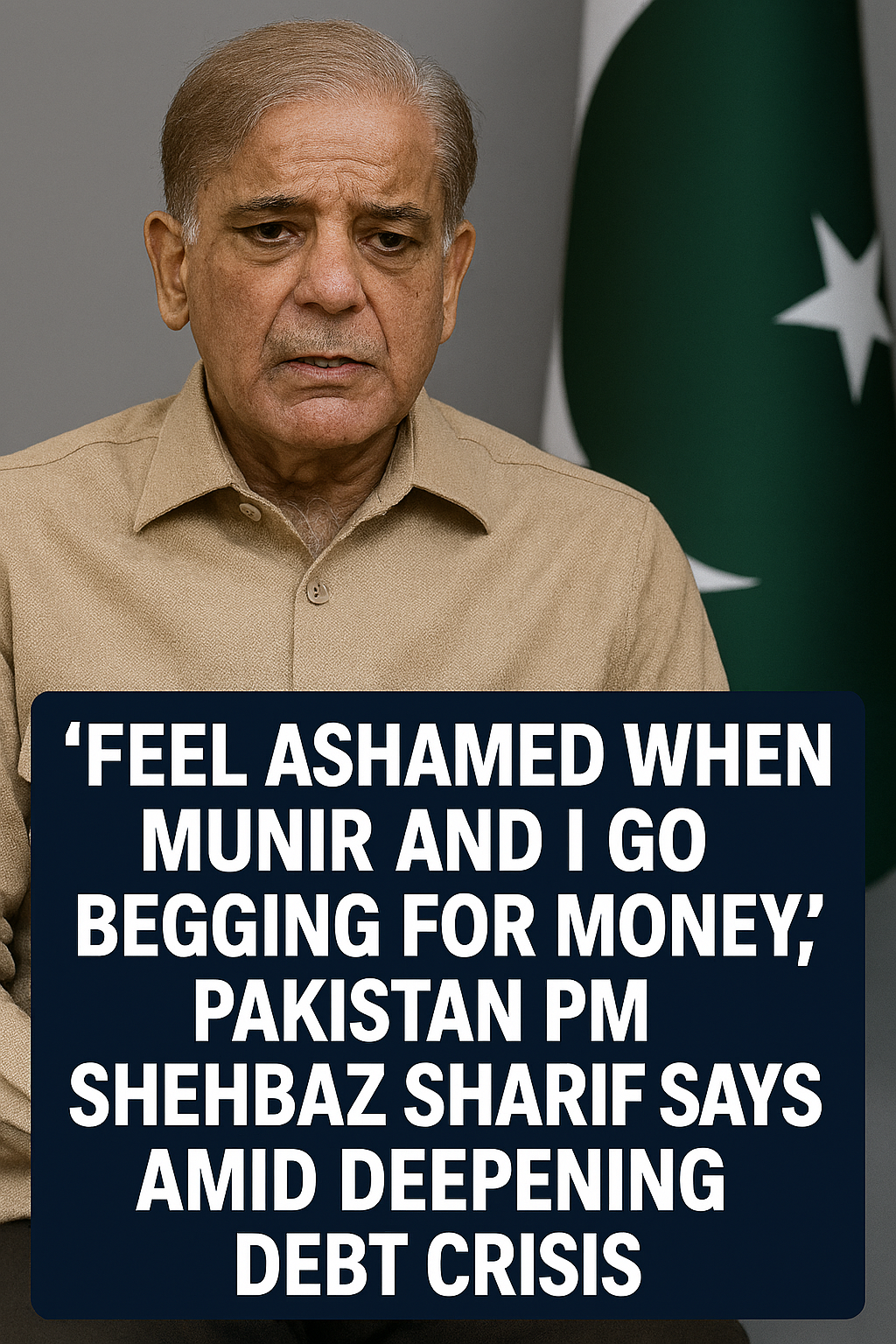
January 31, 2026 — Pakistan’s Prime Minister Shehbaz Sharif delivered a stark assessment of his country’s economic struggles on Friday, saying he and Army Chief Field Marshal Asim Munir feel “ashamed” when they must seek financial assistance abroad to address Pakistan’s mounting debt burden.
Speaking at a business forum in Islamabad, Sharif openly acknowledged the strain that repeated foreign borrowing has placed on Pakistan’s national pride and economic sovereignty, in unusually candid remarks from a leader long accustomed to diplomatic restraint. ([The Tribune][1])
National Embarrassment, Economic Urgency
“We feel ashamed when Field Marshal Asim Munir and I go around the world begging for money,” Sharif said, referring to Pakistan’s reliance on loans from international partners to stabilize its economy. “Taking loans is a huge burden on our self-respect. Our heads bow down in shame. We cannot say no to many things they want us to do.” ([The Tribune][1])
Pakistan’s fiscal challenges have intensified in recent years. Public debt has surged, foreign exchange reserves remain volatile, and the economy continues to rely heavily on external financing, including programs with the International Monetary Fund (IMF) and deposits or investments from regional partners. ([Rediff][2])
Reliance on Foreign Support
In his address, Sharif acknowledged the crucial role played by Pakistan’s “all-weather friends,” including China, Saudi Arabia, the United Arab Emirates, and Qatar, in providing financial support that has helped shore up foreign exchange reserves and offset balance-of-payments pressures.
China, through the China–Pakistan Economic Corridor (CPEC), has rolled over billions of dollars in deposits and is expected to contribute additional funds in coming years. Riyadh has extended deposits and deferred energy payments, while the UAE and Qatar have committed significant investment and development financing. ([Rediff][2])
Despite these inflows, economists warn that foreign borrowing alone cannot address Pakistan’s structural imbalances without comprehensive reforms to taxation, industry, and export competitiveness.
Social and Economic Strain
Sharif’s remarks also highlighted broader socioeconomic challenges facing Pakistan, including rising poverty and unemployment. Recent estimates suggest that nearly 45% of the population lives below the poverty line, a sharp increase from pre-pandemic levels, while unemployment hovers above 7%. ([The Tribune][1])
Industrial growth has been constrained by limited access to capital, low productivity, and heavy reliance on traditional export sectors such as textiles. At the same time, sectors like technology, agriculture, and manufacturing have struggled to achieve sustainable expansion.
Civil-Military Dynamics
The prime minister’s inclusion of the army chief in discussions about foreign financing underscored the blurred lines between civilian and military roles in Pakistan’s economic strategy. By publicly acknowledging Munir’s involvement, Sharif signaled the military’s central position in navigating international negotiations and stabilizing economic institutions.
IMF and Future Outlook
Pakistan is in active discussions with the IMF for extended financing and policy support aimed at stabilizing the economy and restoring investor confidence. While recent IMF disbursements have helped replenish reserves, officials emphasize that achieving long-term stability will require structural reforms and fiscal discipline.
Sharif’s remarks this week reflect a growing recognition within Pakistan’s leadership that solving the economic crisis will demand not only external financing but also internal policy shifts that address tax reform, export diversification, and governance challenges.
International Reaction
The prime minister’s candid acknowledgment of economic vulnerability drew varied reactions domestically and internationally. Some analysts praised his forthrightness, suggesting it may galvanize public support for difficult reforms. Others warned that public admission of monetary dependence could weaken negotiating leverage with creditors and partners.
As Pakistan navigates a complex economic landscape, the government faces mounting pressure to balance immediate financing needs with long-term strategies that reduce reliance on foreign loans and strengthen the foundations of its economy.