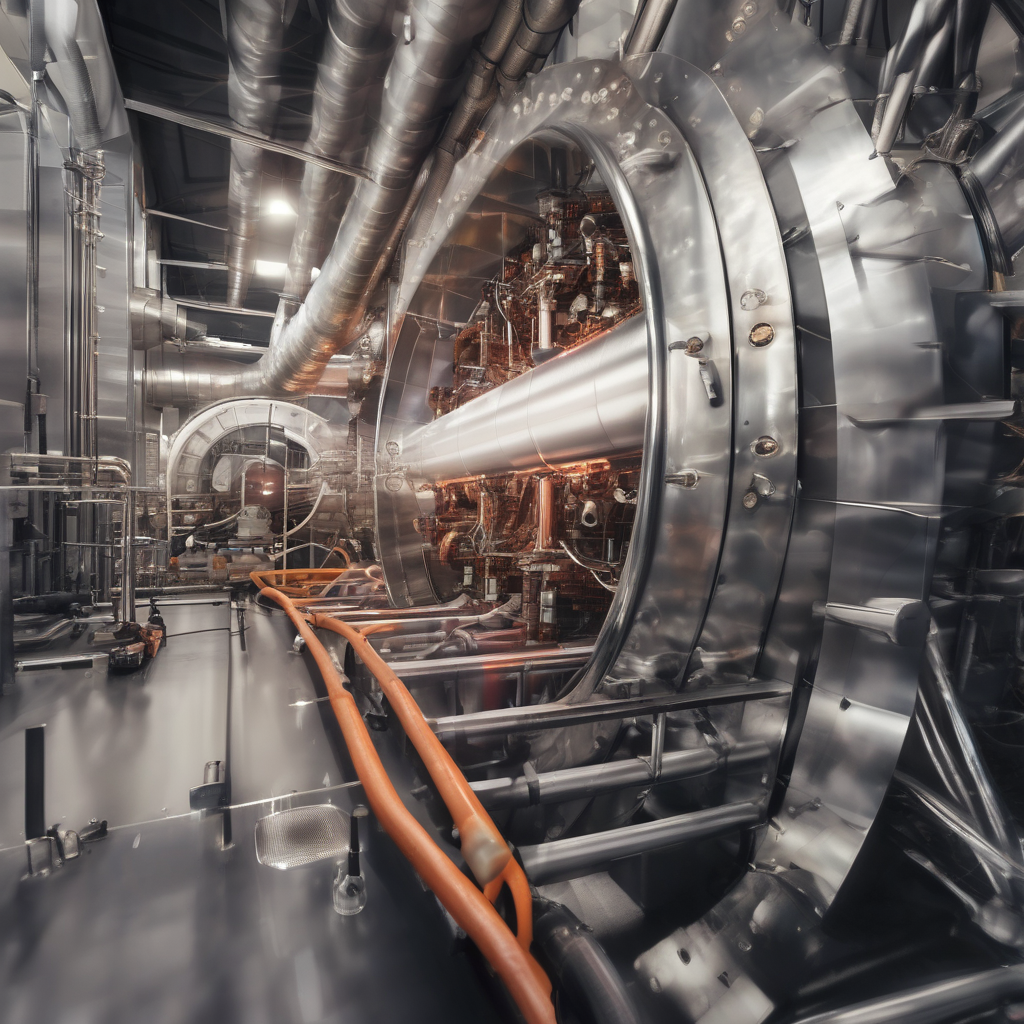
Fusion energy has just taken another significant leap toward becoming reality. After decades of being perpetually “30 years away,” recent breakthroughs at multiple research facilities worldwide suggest commercial fusion power could now be less than 15 years from powering your home. Scientists have achieved record energy outputs, sustained reactions longer than ever, and solved critical engineering challenges that plagued the field for generations.
Look: this isn’t science fiction anymore. The fusion revolution is happening now, and here’s what you need to know.
Analyze: Fusion Energy Inches Closer to Commercial Reality
The landscape of fusion energy has fundamentally shifted in the past 24 months. Multiple private companies and government labs have moved from proving the science works to solving the engineering challenges of commercial deployment. But what does this actually mean for our energy future?
What Is Fusion Energy and Why Does It Matter?
Fusion energy is the process that powers the sun—light atomic nuclei merging to form heavier ones, releasing enormous amounts of clean energy. Unlike today’s nuclear fission plants, fusion produces no long-lived radioactive waste, cannot cause meltdowns, and uses fuel derived from seawater.
Here is the best part: A single glass of water could theoretically provide enough fusion fuel to power one person’s entire lifetime energy needs.
This matters because fusion offers:
- Zero carbon emissions during operation
- Abundant fuel from seawater and lithium
- Inherent safety (reaction stops automatically if disrupted)
- Massive energy density (millions of times more than fossil fuels)
The Latest Breakthroughs You Need to Know
Recent milestones have shattered previous limitations:
- Net energy gain achieved: For the first time in December 2022, Lawrence Livermore National Laboratory’s laser-based fusion experiment produced more energy than it consumed
- Record plasma confinement: MIT and Commonwealth Fusion Systems sustained plasma at 100 million degrees for longer than previously thought possible
- Magnet technology leap: New high-temperature superconducting magnets are 10x stronger and dramatically smaller than previous designs
- Private investment surge: Over $5 billion has flowed into fusion startups in the past three years alone
But that’s not all. European researchers at JET (Joint European Torus) recently doubled their previous energy output record, while China’s EAST reactor sustained a reaction for 1,056 seconds—nearly 18 minutes of continuous fusion.
Technical Hurdles Still to Overcome
Despite the progress, significant challenges remain:
- Materials engineering: Finding materials that can withstand extreme heat and neutron bombardment for decades
- Tritium breeding: Ensuring sufficient fuel supply by breeding tritium within the reactor
- Cost scaling: Moving from billion-dollar experiments to cost-competitive power plants
- Grid integration: Adapting fusion’s steady output to work with modern electrical grids
The Global Race for Fusion Power
The competition to commercialize fusion has become a 21st-century space race, but with climate change as the ultimate deadline.
Key Players and Projects
Government-led initiatives:
- ITER (France): 35-nation collaboration building the world’s largest tokamak reactor, aiming for first plasma by 2035
- NIF (USA): National Ignition Facility advancing laser-based inertial confinement
- EAST/WEST (China): Aggressive domestic program with multiple reactor designs
Private companies leading innovation:
- Commonwealth Fusion Systems: Using MIT-developed SPARC reactor design, targeting grid power by early 2030s
- TAE Technologies: Pursuing hydrogen-boron fusion for even cleaner reactions
- Helion Energy: Developing pulsed fusion with direct electricity generation
Timeline: When Will Fusion Power Your Home?
Realistic projections from industry experts now show:
1. 2025-2030: First demonstration plants producing net electricity
2. 2030-2040: Initial commercial reactors come online at $0.10-0.15/kWh
3. 2040+: Mass deployment and cost parity with renewables
Now, this timeline assumes steady funding and no major technical setbacks. But the bottom line is: fusion is no longer theoretical—it’s an engineering problem being solved in real-time.
Why This Matters for Global Energy Politics
Fusion energy won’t just change how we generate power; it will reshape geopolitical power structures that have existed since the Industrial Revolution.
Impact on Climate Goals
Current national commitments under the Paris Agreement fall short of limiting warming to 1.5°C. Fusion could be the breakthrough technology that:
- Replaces baseload coal and natural gas plants without emissions
- Provides reliable power when solar and wind are intermittent
- Powers energy-intensive industries like steel, cement, and manufacturing
Economic Implications
The first nations to master commercial fusion will gain:
- Energy independence: No more reliance on imported fossil fuels
- Industrial advantage: Cheap, unlimited energy for manufacturing
- Export revenues: Licensing technology to other countries
- Job creation: An estimated 500,000+ high-skilled jobs in the fusion sector
What This Means for You: Staying Informed
Fusion energy might seem distant, but its development will affect energy prices, climate policy, and investment opportunities within this decade. Here’s how to stay ahead of this story:
How to Follow Fusion Energy Progress
1. Track key milestones: Watch for announcements from ITER, NIF, and major private companies
2. Follow funding flows: Government appropriations and venture capital investments signal readiness levels
3. Monitor policy shifts: Energy regulations will need updating for fusion deployment
4. Understand the lingo: Learn terms like “Q-value” (energy out/energy in), “tokamak,” and “plasma confinement”
5. Watch for pilot plants: The first commercial-scale demonstrations will be your signal that fusion is truly arriving.
The bottom line: fusion energy has moved from the physics lab to the factory floor. While challenges remain, the pace of progress is accelerating exponentially. For news enthusiasts and professionals tracking energy, climate, or technology, this is the story that will define the next century.
Stay informed. Stay curious. The future is closer than you think.
—
Want more in-depth analysis on breakthrough technologies shaping our world? [Subscribe to NewsYog’s weekly science briefing] for clear, concise updates that cut through the noise.