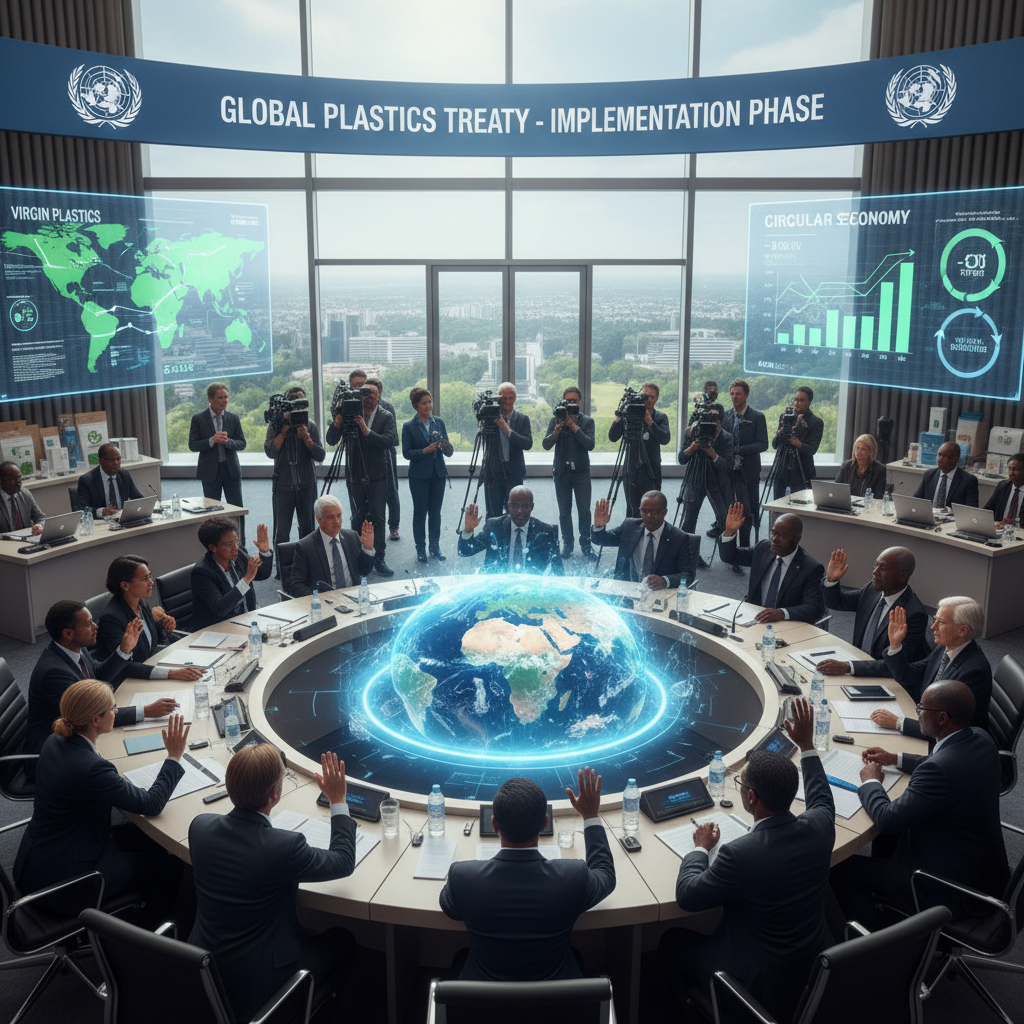
Landmark Agreement: A legally binding global treaty to end plastic pollution, adopted by the UN in mid-2025, officially entered its implementation phase in January 2026.
Core Objectives:
- Reduce Virgin Plastic Production: A critical measure to curb the influx of new plastics.
- Promote Reuse and Refill Systems: Encouraging a shift away from single-use plastics.
- Enhance Recycling Infrastructure: Particularly in developing nations, to manage existing plastic waste and prevent environmental entry.
- Circular Economy for Plastics: Aiming to minimize waste and maximize resource efficiency.
Industry Transformation:
- Innovation Pressure: Petrochemical companies and plastic manufacturers face pressure to innovate sustainable alternatives and redesign products.
- Investment in R&D: Significant investment in biodegradable materials, compostable plastics, and alternative packaging solutions.
- Redesigned Business Models: Companies are challenged to develop easily recyclable plastics, implement closed-loop systems, and rethink packaging strategies.
Financial and Technological Support:
- Support for Developing Nations: Developed nations and international bodies are sought for financial commitments to aid developing countries in transitioning away from conventional plastics.
- Equitable Transfers: Financial and technological transfers are crucial for global participation and preventing economic disparities. Funds will support waste management infrastructure, local sustainable alternatives, and community education.
Potential Impacts:
- Drastic Reduction in Plastic Waste: Promising a significant decrease in plastic waste entering oceans, rivers, and terrestrial ecosystems.
- Environmental Protection: Mitigating damage to biodiversity, human health, and natural habitats.
- Economic Disruption: Significant economic disruption and transformation within the plastic manufacturing and packaging industries.
- Job Displacement and Creation: Potential job displacement in traditional plastic production, necessitating retraining and new opportunities in green industries.
Challenges:
- Enforcement and Compliance: Success hinges on political will for rigorous legislation and international monitoring.
- Equitable Global Participation: Ensuring major plastic-producing and consuming nations demonstrate strong commitment is critical.
Future Outlook: The treaty is poised to catalyze a global innovation boom in biomaterials and circular economy models, fundamentally reshaping industrial practices and consumer habits towards a plastic-pollution-free future.