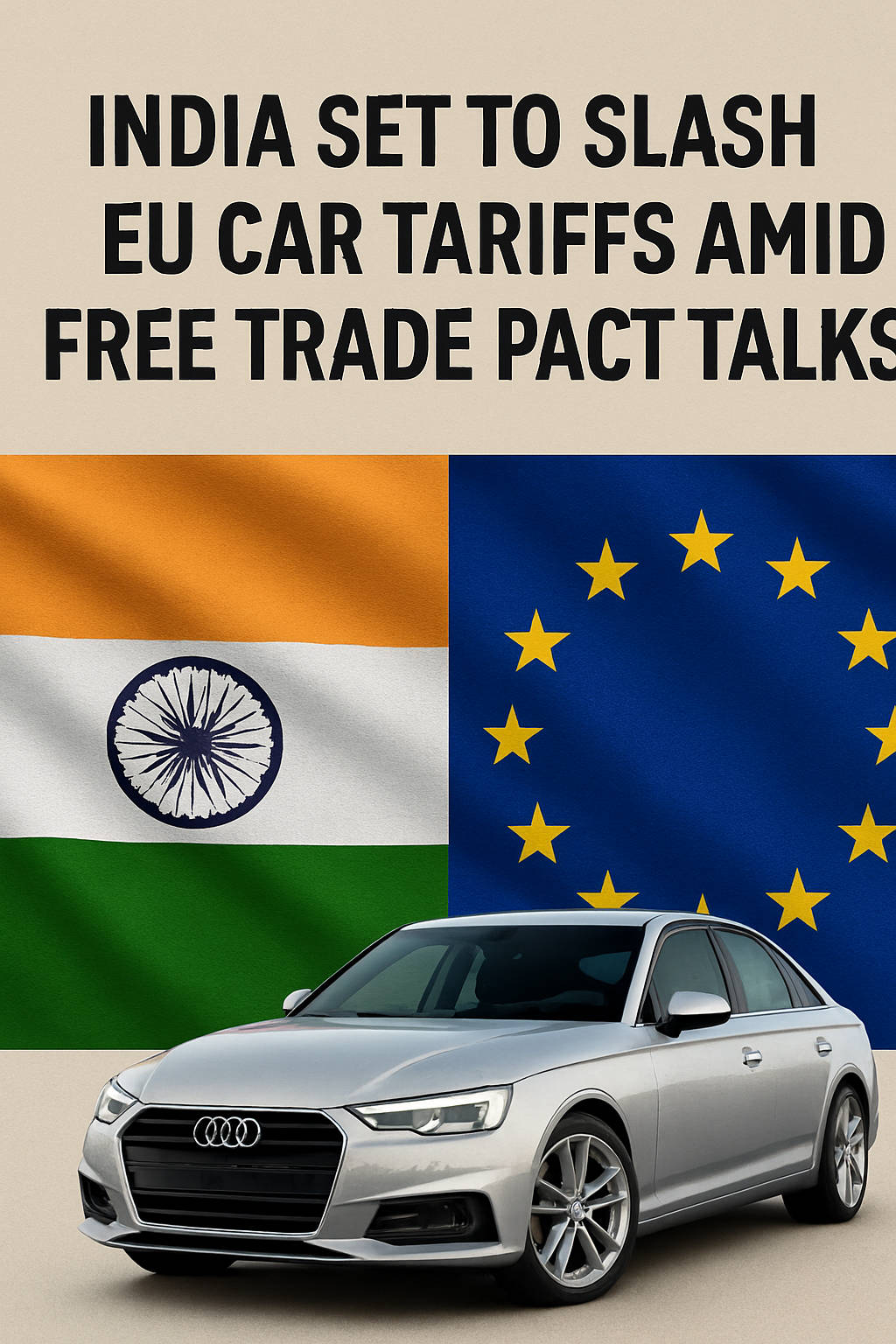
New Delhi: India is considering a reduction in import tariffs on automobiles from the European Union (EU) as part of renewed efforts to finalize a long-pending India–EU Free Trade Agreement (FTA), according to officials familiar with the negotiations.
The move, if implemented, could significantly impact India’s automobile sector, alter pricing for imported European vehicles, and mark a major breakthrough in trade relations between the two economies.
Push to Revive Stalled Trade Talks
India and the EU resumed FTA negotiations with fresh urgency after years of stalled discussions, driven by global supply chain shifts and rising protectionism in major markets. Lowering automobile tariffs has been a key demand from the EU, while India has been pressing for improved access for its services sector, pharmaceuticals, textiles, and skilled professionals.
At present, India levies import duties ranging from 60% to over 100% on fully built imported cars, among the highest globally. These high tariffs have long limited the presence of European carmakers in the Indian market.
Reducing duties on EU-made vehicles is seen as a critical concession to move the trade pact forward.
What the Proposed Changes Could Mean
Lower Prices for Imported Cars
A tariff cut could make vehicles from European brands such as BMW, Mercedes-Benz, Audi, Volkswagen, Volvo, and Skoda more competitively priced in India. Industry analysts say price reductions could range between 10% and 25%, depending on the depth and structure of the tariff cuts.
Increased Competition in India’s Auto Market
Lower import duties would intensify competition, particularly in the premium and mid-range segments, encouraging manufacturers to improve technology, safety standards, and pricing strategies.
Concerns for Domestic Manufacturers
Indian automakers have expressed caution, warning that a sudden influx of cheaper imports could impact domestic manufacturing and employment. Industry bodies have urged the government to ensure safeguards such as:
- Phased tariff reductions
- Import volume caps
- Incentives for EU automakers to expand local manufacturing under the “Make in India” initiative
Government officials indicated that any tariff cuts are likely to be gradual, allowing domestic players time to adjust.
Why the EU Is Pushing Hard
The European Union sees India as one of the fastest-growing automobile markets globally, particularly for premium vehicles and electric mobility. With demand slowing in parts of Europe and China, EU carmakers are eager to strengthen their foothold in India.
For the EU, the FTA promises:
- Improved market access
- Increased exports
- Greater investment opportunities in India’s auto and EV sectors
What India Seeks in Exchange
In return for tariff concessions, India is negotiating for key benefits, including:
- Easier market access for Indian IT and professional services firms
- Relaxed visa norms for skilled Indian workers
- Expanded exports of pharmaceuticals, textiles, and agricultural goods
These trade-offs remain central to the ongoing negotiations.
Timeline and Next Steps
While no formal announcement has been made, officials from both sides have signaled positive momentum following recent negotiation rounds. Any agreement on automobile tariffs is expected to be implemented over several years rather than immediately.
Trade experts believe a comprehensive India–EU FTA could:
- Significantly boost bilateral trade
- Attract foreign investment
- Strengthen India’s integration into global supply chains
Outlook
India’s willingness to consider lowering EU car tariffs signals a pragmatic shift in trade policy, balancing market openness with domestic industrial priorities. As negotiations continue, the final structure of the tariff reductions—and the safeguards attached—will determine how effectively India protects its manufacturing base while expanding global trade ties.